Fractional Ownership of Gliders – Pros and Cons
Owning and flying your own glider is a very rewarding and privileged experience for us as pilots, however for many it might not be practical nor worth the investment especially if we are not able to dedicate the time required to fly and maintain the ship.
There is another option that has several advantages and that is joining an owners’ group that operates one or more aircraft. This could be a way for more pilots to experience soaring in high quality ships not available in the typical gliding club.
Pros
Location
The ships can be located in premium gliding location(s) that you can travel to for a different experience than your home location. By having fractional ownership, you can travel to the location and fly without having to trailer the glider across country. Depending on the group, you may be able to take the glider for several days or a few weeks depending on the groups owners privileges.
Cost
High quality gliders are not cheap (+$100,000) and can be beyond the means of many pilots. If you join an owners’ group that purchases high quality ships, then you can experience flying premium equipment without the full investment expense.
Owners’ groups vary a lot! Many of them require the owners to own another aircraft to be a member. You will need to check this detail. One such group out of Morgan Ut, Rocky Mountain Soaring, doesn’t require members to own other aircraft, and they also encourage traveling with the gliders to the best weather destinations.
Quality and Performance
Purchasing and maintaining quality ships with superior glide performance is beyond the means of most club operations. An owners group that focuses on only having high performance sailplanes (44/1 L/D or better) will enable pilots to learn new skills and compete in contests.
Registration/Insurance/Annual Inspections
The annual cost of registration, insurance and inspections add up to several thousands of dollars. A fractional owner would only bear their share of that cost.
Ownership Structure/Investment
As a fractional Owner you will be buying into a group or an LLC, at a percentage of the purchase and annual costs. Each member will contribute equally. Depending on the organization and participation of the members there could be additional management fees. This ownership can be sold if the pilot decides to leave the group therefore recouping all or most of the original investment.
Storage/Maintenance
The owners group provide storage during the winter months, or they make ships available for members to take them to warmer locations so they can be flown if conditions are not flyable at the home location. In addition, repairs and maintenance can be caried out during the off season.
Access to Instructors
A well-run owner’s group may have instructors on hand to assist with familiarization, annual checkouts and development of new skills for owning pilots. This also ensures ships are being flown safely and required skills are met before pilots venture off on their own or try new skills such as cross country flying.
New experiences
Imagine being able to fly in premium locations or in contests away from your home location without the need to own, maintain and haul gliders across the country. High performance aircraft can make “stretching your rubber band” a safer experience. If you want to go for those long/record type flights, owning a high-performance ship can assist in making that a reality. Groups vary a lot, so thoughtful discussions can assist you in finding the right fit.
Cons
Loss of freedom to fly any time you want.
This will vary depending on the number of aircraft to member ratio of each group. You will only have partial ownership so you can only expect to fly on a part time basis. There will be a booking process so you can plan when you want to fly but in reality, not all pilots have the time to fly at every opportunity available. Obviously, this structure won’t suit everyone but for many it could be the perfect solution.
Conclusion
Fractional ownership is a great way for new and experienced pilots to fly quality ships and improve their skills without the investment and time required to own a ship outright.
Example Owners Group
Rocky Mountain Soaring is one such owners group based in Utah that offers shares in high quality single and 2 place gliders. RMS is a growing group with a DG505 and ASW28 15/18 FES in the group and plans for several other gliders as membership grows.
RMS operate at ideally 4 members per aircraft in the group. This group caters for the newly certificated pilots as well as record/racing experts. Special care and attention is given to the newer pilots to assist them in learning and developing their cross-country skills.
The only FES equipped ASW-28 15/18 in the USA is in this group! The FES will enable an hour of operational time in the extending range mode. That should be sufficient to returning to home or to an excellent out landing airport.
Gliders are based at Morgan County Airport in Utah with access to the four premium soaring locations Morgan, Nephi, Logan and Heber all with tow planes and all within 1.5 hours of the SLC International airport. There is also a composite repair/maintenance facility at the Morgan airport where the aircraft are housed and maintained.
If you are interested in finding out more or joining the group contact York Zentner at yzentner65@gmail.com or by
phone on (801) 673-0303. Web site: https://RockyMtnSoaring.com
There are other groups located around the country. For example, there is another such operation at Seminole Lake Florida.
Authors Bio
York Zentner
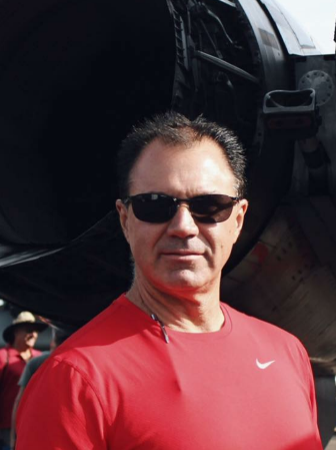
York has been flying R/C gliders and powered models since he was 8 years old. He soloed in gliders at 16 then shortly earned a powered aircraft rating. He has been an airline pilot for over 38 years. He has flown for SkyWest Airline where he was a Check-airman and Simulator Instructor for 15 years and now flies for Southwest Airlines.
He enjoyed long Cross Country soaring flight and racing. One of his passions is teaching the art of XC soaring and seeing pilots expand their abilities and skill sets.
He also has a composites business that has developed winglets/tail group modifications for several aircraft including the LANCAIR IV’s. The technology has come from modifying and improving high performance sailplanes. The safety and overall performance improvements characteristics are such that with these modification, an insurance company will write policies similar to certified aircraft.
In his flying career he has accumulated over 4000+ hours soaring and 38,000 hours total aircraft time, 13,000 hours instructing in many types of aircraft. He has flown over 300 types of aircraft.